Best Areas in Vietnam for 1–12 Month Rentals for Expats
Vietnam is a top destination for expats, digital nomads, and remote workers looking for affordable long-term stays. With a fast-growing economy, reliable internet, amazing food, and diverse landscapes, it offers several distinct areas to suit different lifestyles. Whether you want a buzzing metropolis, a beach town, or a mountain retreat, here’s a breakdown of the best areas for 1–12 month rentals.
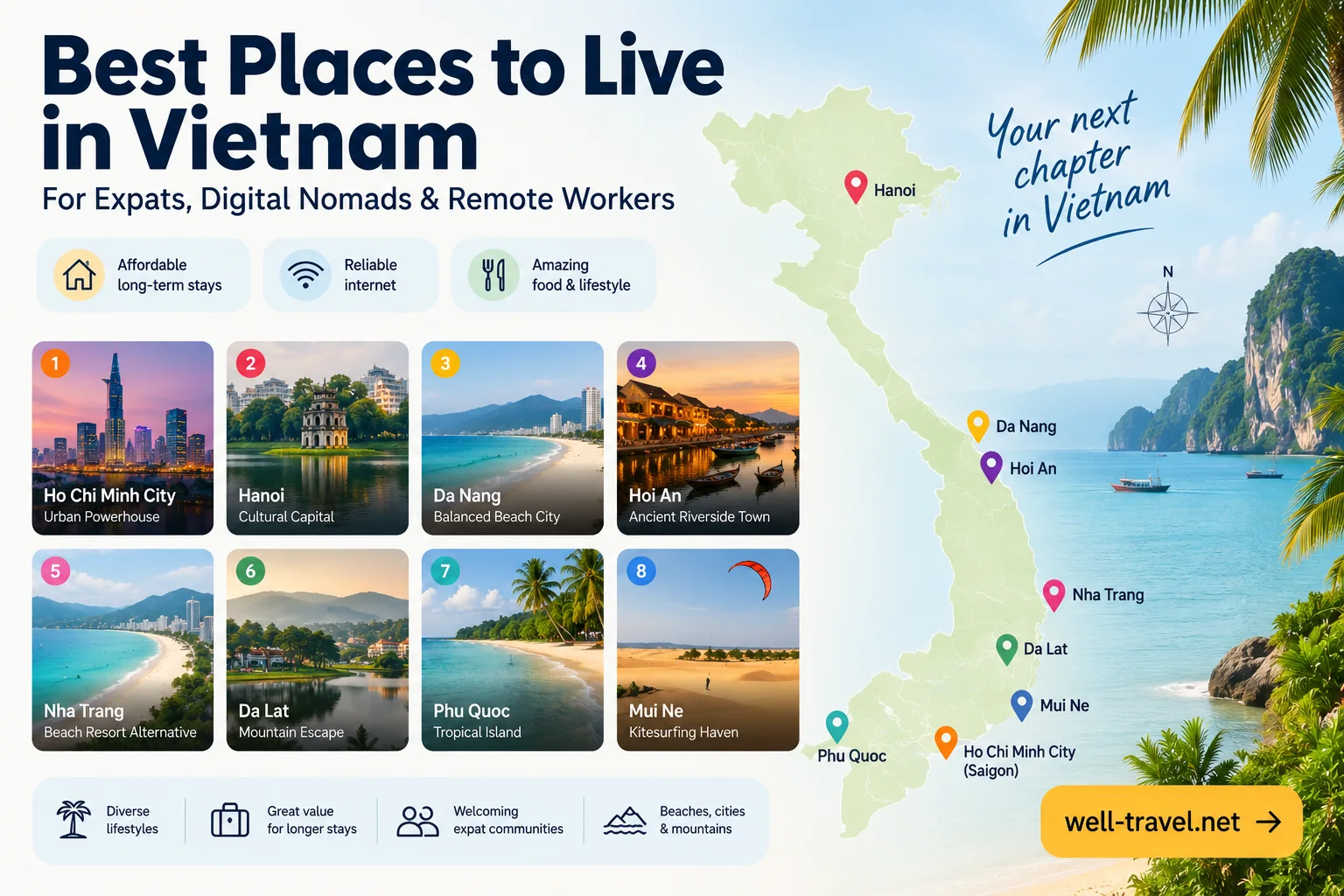
1. Ho Chi Minh City (Saigon) – The Urban Powerhouse
Best for: Professionals, nightlife lovers, and those who crave a fast-paced city life.
Average monthly rent (1-bedroom): $400–$800 in central districts (D1, D2, D3); $250–$500 in outer districts.
Expat vibe: Large international community, co-working spaces, endless dining, and vibrant nightlife. Chaotic but incredibly dynamic.
- Pros: Best job market, modern amenities, direct flights to Asian hubs, excellent healthcare.
- Cons: Heavy traffic, air pollution, higher cost of living than other Vietnamese cities.
2. Hanoi – The Cultural Capital
Best for: History buffs, foodies, and those who prefer a slower, more traditional pace than Saigon.
Average monthly rent (1-bedroom): $350–$700 in central areas (Hoan Kiem, Tay Ho); $200–$400 in suburban districts.
Expat vibe: A mix of long-term expats, diplomats, and creative pros. The Old Quarter is charming but touristy; Tay Ho (West Lake) is the top expat enclave.
- Pros: Rich culture, excellent street food, four distinct seasons, lower cost of living than Saigon.
- Cons: Cold winters (15°C), occasional pollution from coal heating, less English-friendly outside expat areas.
3. Da Nang – The Balanced Beach City
Best for: Digital nomads, beach lovers, and families who want modern infrastructure without the chaos.
Average monthly rent (1-bedroom): $300–$600 in beachfront areas (My Khe, An Thuong); $200–$400 inland.
Expat vibe: Growing community of remote workers and entrepreneurs. Clean, wide roads, long sandy beach, laid-back atmosphere.
- Pros: Best value for money, fast internet, international airport, close to Hoi An and Hue.
- Cons: Limited job market (mostly digital nomads), less cultural depth than Hanoi, rainy season from September to December.
4. Hoi An – The Ancient Riverside Town
Best for: Artists, slow travelers, short-term stays (1–3 months), and those seeking a quiet, picturesque life.
Average monthly rent (1-bedroom): $250–$500 in the old town or nearby villages.
Expat vibe: Small but friendly community centered around yoga, cooking, and sustainable living. A UNESCO World Heritage site with lantern-lit streets and tailors on every corner.
- Pros: Ultra-cheap, beautiful scenery, great food, peaceful.
- Cons: Very touristy in peak season, limited healthcare, less reliable internet than bigger cities, not ideal for long-term career work.
5. Nha Trang – The Beach Resort Alternative
Best for: Scuba divers, party-goers, and those who want a classic beach vacation for a few months.
Average monthly rent (1-bedroom): $250–$500 in central beach areas.
Expat vibe: Russian expats (heavily present), tourists, and divers. Lively beachfront with bars and restaurants.
- Pros: Beautiful beaches, good diving, affordable, many English-speaking services.
- Cons: Overdeveloped in parts, crowded with domestic tourists, can feel like a resort town rather than a living city.
6. Da Lat – The Mountain Escape
Best for: Nature lovers, those seeking cool weather, and digital nomads who want a slower pace.
Average monthly rent (1-bedroom): $200–$400.
Expat vibe: Small but growing community focused on farming, eco-living, and creative work. At 1,500m elevation, spring-like weather year-round.
- Pros: Cool climate (15–25°C), stunning pine forests, cheap living, good for focused work.
- Cons: Remote (3–4 hours from the nearest major airport), limited healthcare, fewer coworking spaces, can be rainy from June to October.
7. Phu Quoc – The Tropical Island
Best for: Island life, remote workers who love beaches, and those on a 1–6 month escape.
Average monthly rent (1-bedroom): $400–$800 near Duong Dong town; $300–$600 in less developed areas.
Expat vibe: Small but growing community of divers, resort workers, and digital nomads. Developing fast with new roads and airports.
- Pros: Pristine beaches, visa-free entry for up to 30 days (for many nationalities), relaxed island vibe.
- Cons: Higher cost of living due to imports, limited job opportunities, can be quiet outside high season (November–March).
8. Mui Ne – The Kitesurfing Haven
Best for: Kitesurfers, budget travelers, and those wanting an ultra-cheap beach lifestyle with fewer crowds.
Average monthly rent (1-bedroom): $200–$400 near the beach.
Expat vibe: Small but tightly-knit community of kitesurfers, divers, and budget digital nomads. Relaxed and focused on outdoor activities.
- Pros: Incredibly affordable, strong winds for kitesurfing and windsurfing, less touristy than Nha Trang, stunning sand dunes.
- Cons: Limited healthcare, fewer coworking spaces, remote (4 hours from HCMC), less nightlife and dining variety.
Which Area Is Right for You?
Choosing the best area depends on your priorities:
- For career and networking: Ho Chi Minh City is hard to beat.
- For culture and charm: Hanoi offers a deeper Vietnamese experience.
- For beach lifestyle on a budget: Da Nang is the best all-rounder.
- For peace and quiet: Hoi An or Da Lat for short stays.
- For pure tropical island mode: Phu Quoc.
- For kitesurfing and ultra-cheap beach living: Mui Ne.
All areas have reliable internet, decent cafes, and monthly rental options. The key is to visit for a week first, meet local expats, and find a neighborhood that matches your vibe. Vietnam's 90-day e-visa (for many nationalities) makes it easy to start with a 3-month stay and extend if you love it.