Phuket in the Rainy Season (July–October): A Complete Guide for Travelers
Looking for a place in Phuket, Thailand? Tell us what you need and we’ll look for matching options.
Request a home searchMost travelers avoid Phuket between July and October, assuming it's constant rain with nothing to do. But the monsoon season offers surprising perks: lower prices, fewer crowds, and a more relaxed island experience. This guide covers what to expect—from savings to activities and accommodation tips—so you can decide if it's right for you.
What the Rainy Season Actually Looks Like
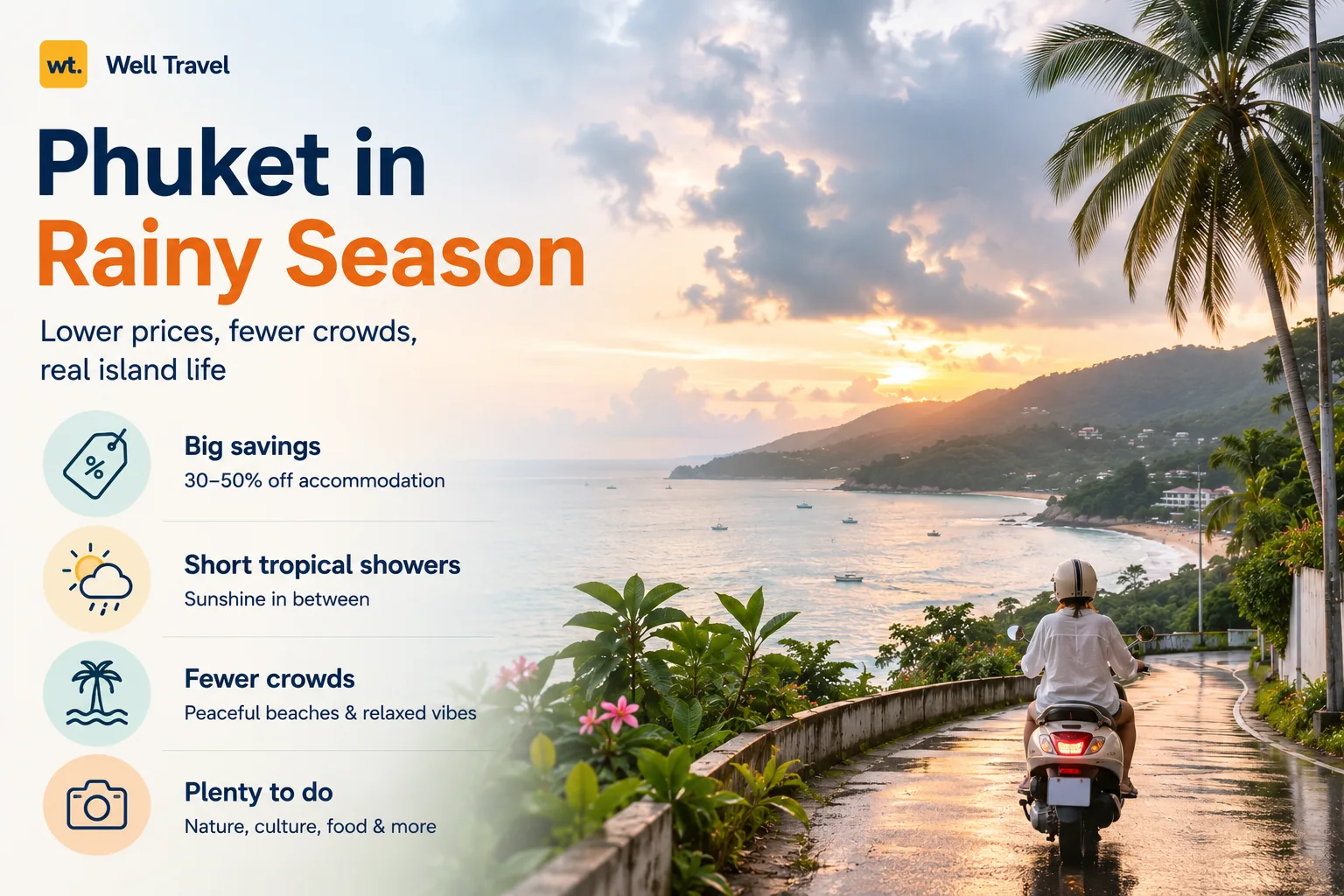
July through October is Phuket’s southwest monsoon. Expect humid weather (28–32°C) with short, heavy downpours, usually in afternoons or evenings. Sunny mornings and clear breaks are common. The west coast gets rougher seas, while the east coast and sheltered bays stay calmer.
Price Savings: Big Discounts for All Travelers
Accommodation prices drop 30–50% from July to October. Hotels, villas, and condos in Patong, Kata, or Rawai offer low-season deals—book directly or ask for discounts. Flights, dining, and attractions also cost less, so your budget goes further. That means longer stays or more activities are possible without the peak-season price tag.
Activities: What You Can (and Can’t) Do
Unexpectedly, many outdoor activities are still available. Rain passes quickly, and tours adapt. Here’s what works:
- Beach time: East coast beaches (Ao Yon, Cape Panwa) are calm for swimming; west coast has rip currents—heed red flags. You’ll nearly have the sand to yourself.
- Sightseeing: Temples, markets, cooking classes, and spas run year-round. Indoor options are perfect for rainy hours.
- Island hopping: Tours to Phi Phi, James Bond Island, and Similan still run, but check sea forecasts—rough days may cancel.
- Diving & snorkeling: Visibility is lower, but Koh Racha and Koh Doc Mai still offer good dives. Some sites close for marine conservation.
- Coworking & indoor life: For remote workers or downtime, rain means cooler temps and quiet spaces—plenty of air-conditioned cafés and co-working spots.
Be flexible. Have backup plans for rainy afternoons, and you’ll never be bored.
How to Choose Accommodation for a Rainy-Season Trip
Picking the right place matters more during the monsoon. Here’s what to look for:
- Location: Avoid flood-prone areas (low-lying Phuket Town, parts of Kata, Chalong). The east coast (Rawai, Nai Harn) offers calmer beaches. Higher ground often means better drainage.
- Building quality: Check for good drainage, sealed windows, and strong AC. Read recent reviews—humidity can mean mold issues.
- Indoor amenities: Covered terraces, reliable Wi-Fi, and backup generators (for remote areas) make rainy days comfortable. A gym or indoor common space helps.
- Mobility: If driving a motorbike, stay on a main road to avoid muddy lanes. A car or scooter with good tires is essential.
A pool looks nice in photos, but when it rains for days, indoor comfort matters more. Choose accordingly.
Is It Worth It? The Bottom Line
For a short trip, July–October can be hit-or-miss. But if you value affordability, peace, and a local vibe, the rainy season is a smart choice. Savings on accommodation and flights often outweigh any inconvenience. Pack an umbrella, plan indoor backup activities, and pick your stay wisely. You might find Phuket’s low season is actually the best time to visit.