Best Areas to Live in Bali for 1–12 Month Rentals (2026): Canggu, Ubud, Uluwatu or Sanur?
Looking for a place in Bali, Indonesia? Tell us what you need and we’ll look for matching options.
Request a home searchBali pulls people in for a month or a year — and the area you choose shapes everything. Whether you’re a digital nomad chasing coworking spaces, a surfer hunting waves, a yogi looking for peace, or a family wanting calm beaches, the island has a spot that fits. In this guide we compare Canggu, Ubud, Uluwatu, and Sanur — the four most popular bases for mid-term stays — looking at vibe, rental prices, internet, weather, and what daily life actually feels like.
Well Travel specialises in 1–12 month rentals across Southeast Asia, so we’ve packed in real-world advice to help you pick the right area for your Bali stay.
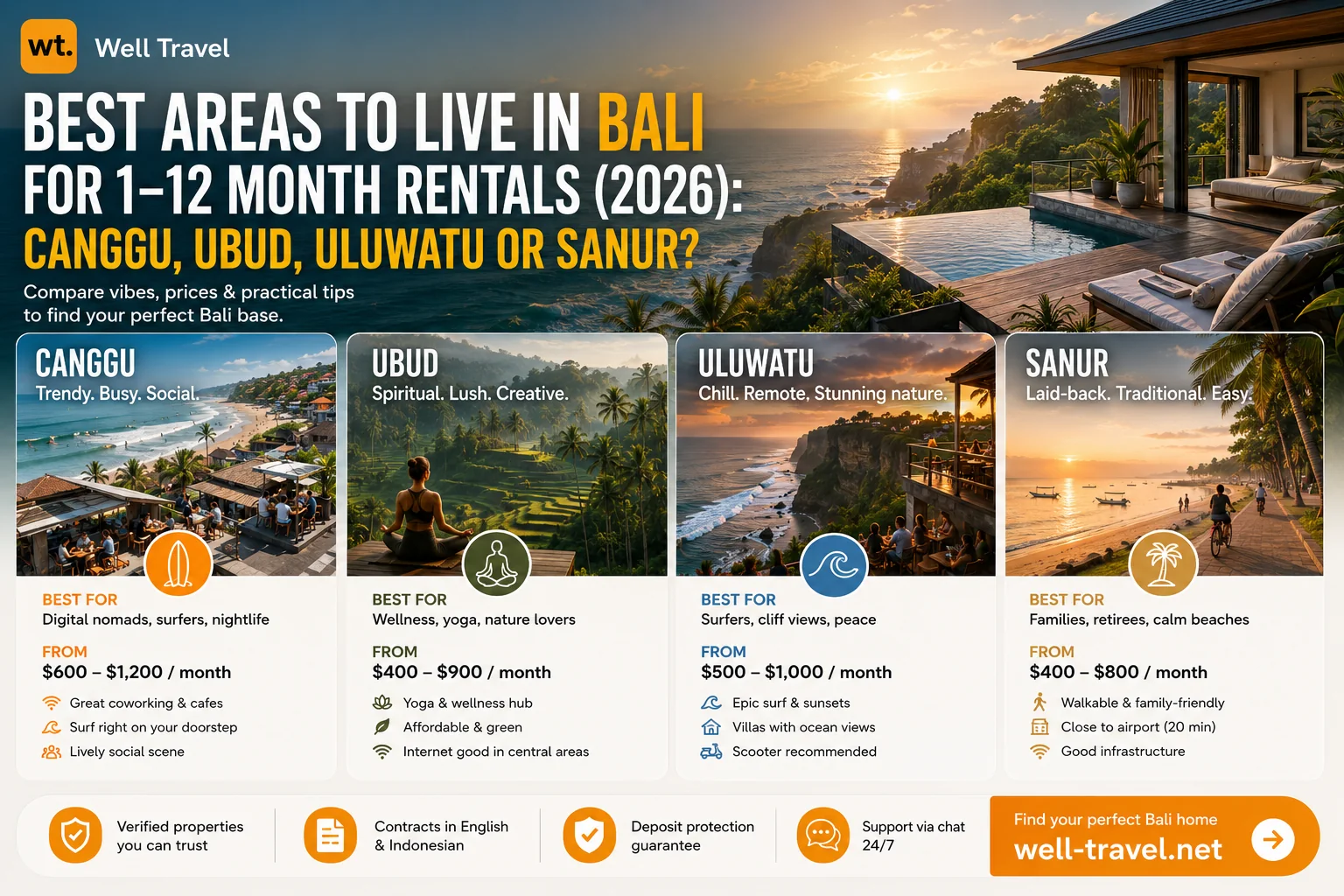
Quick Overview: Which Area Suits You?
Note: Prices below are indicative and vary by season. For exact pricing, send your preferred dates and duration to Well Travel. Longer rentals (6+ months) usually get lower monthly rates.
| Area | Best For | Average studio monthly rent (2026, starting from) | Vibe |
|---|---|---|---|
| Canggu | Digital nomads, surfers, nightlife | $600 – $1,200 | Trendy, busy, social |
| Ubud | Wellness, yoga, nature lovers | $400 – $900 | Spiritual, lush, creative |
| Uluwatu | Surfers, cliff views, peace | $500 – $1,000 | Chill, remote, stunning nature |
| Sanur | Families, retirees, calm beaches | $400 – $800 | Laid‑back, traditional, easy |
Canggu – The Digital Nomad Hub
Canggu is the epicentre of Bali’s remote work scene. Rice fields still exist, but they share space with sleek coworking spaces (Dojo, Outpost), smoothie bowl cafes, and surf breaks at Batu Bolong and Berawa. It’s loud, dusty in dry season, and traffic can be brutal — but the energy is unmatched.
Rentals & Prices
Furnished studios start around $600/month. Villas with private pools run $1,000–$2,000. Longer stays (6+ months) often get lower rates. Most rentals include Wi‑Fi. Well Travel listings in Canggu typically come with AirPlay‑ready TVs for streaming.
Who Should Stay Here?
Digital nomads who want walkable access to cafes and coworking, surfers who don’t mind crowds, and people who enjoy a social calendar. Less ideal if you need total quiet or have a car — parking is a nightmare.
Ubud – Spiritual & Creative Core
Ubud is Bali’s cultural heart — think yoga shalas, organic warungs, monkey forests, and endless green. It’s cooler than the coast, both temperature and vibe. The main centre is touristy, but just 10 minutes out you’ll find quiet rice-terrace villages like Penestanan and Sayan.
Rentals & Prices
Monthly rentals are the most affordable in Ubud. A studio can be $300–$500; a one‑bedroom villa with pool starts at $600. Many properties offer a shared kitchen. Internet is reliable in central areas but can drop in remote ones — always ask for a speed test before booking.
Who Should Stay Here?
Yoga practitioners, writers, artists, and anyone seeking a slower pace. Ubud is also great for wellness retreats. Not ideal if you want beaches, nightlife, or easy airport access (it’s a 1.5‑hour drive).
Uluwatu – Cliffs, Waves & Quiet Luxury
Uluwatu sits on southern limestone cliffs with dramatic ocean views. It’s less developed than Canggu — no huge supermarkets or coworking spaces yet — but has excellent surfing (Uluwatu, Padang Padang) and stunning sunsets at Single Fin. The vibe is laid‑back and slightly upscale.
Rentals & Prices
Most rentals are villas (apartments are rare). A one‑bedroom villa with pool starts around $800–$1,200, but many require a scooter to reach shops and cafes. Internet quality varies — check if the villa has fibre optic. Uluwatu is quieter than Canggu, making it a good choice for couples or solo travellers who want privacy.
Who Should Stay Here?
Surfers (especially intermediate/advanced), people who want a more exclusive feel, and those who don’t mind being car‑dependent. Not ideal if you need frequent fast food or a big social scene outside of sunset drinks.
Sanur – Easy Family & Retiree Choice
Sanur offers a flat, walkable beachfront with a calm lagoon — no big waves. It’s quieter than Canggu, more established than Uluwatu, and closer to the airport (20 minutes). The main road is lined with restaurants, minimarts, and dive shops. It’s the least “Instagram‑famous” area, which many find refreshing.
Rentals & Prices
Sanur has the widest range of housing: apartments in low‑rise hotels, villas in residential compounds, and traditional houses. Monthly rents for a studio start at $400. Families often lease two‑bedroom villas for $700–$1,200. Internet is generally good, but always confirm with the host.
Who Should Stay Here?
Families, remote workers who need reliable infrastructure, retirees, and anyone who wants a peaceful base without sacrificing convenience. If you’re looking for a long‑term beach stay with easy access to Ubud day trips, Sanur is a smart pick.
Practical Considerations for Any Stay Length
Visa & Legal Stay
Indonesia offers a Visa on Arrival (30 days, extendable once for another 30) for most nationalities. For longer stays (60+ days), the B211A social‑business visa is common — valid for 60 days and extendable up to 6 months. Well Travel can help with property‑related documents (like a rental agreement) needed for extensions. When you book through Well Travel, we prepare a bilingual rental agreement (English and Indonesian) to protect both parties.
Deposits & Payments
When you book through Well Travel, the security deposit is held by the host. It’s returned after check‑out, and our platform provides a guarantee process if the host doesn’t refund without cause (see our deposit FAQ for details).
Well Travel does not accept direct online payments in USD or EUR. Payments are made in cryptocurrency, Russian rubles, or via a localized exchange to the landlord’s account. Your deposit is kept by the host — Well Travel never holds client funds.
Getting Around
Scooters are the most common transport in Bali (rental ~$50–$80/month). In Sanur and Ubud, you can get by with ride‑hailing apps (Gojek, Grab) and walking. Canggu and Uluwatu almost require a scooter. For longer stays, consider buying a second‑hand scooter or signing a monthly rental contract.
If you plan to ride, make sure you have the correct license — read our guide on motorbike licenses in Southeast Asia.
Internet & Workspace
All four areas have good fibre coverage in central locations. Canggu and Ubud have the most coworking spaces; Sanur has a few; Uluwatu relies on villa Wi‑Fi. Always confirm internet speed with the host before booking.
How to Decide: A Step‑by‑Step Framework
- Duration: For 1–12 months, consider long‑term costs and daily practicalities.
- Budget: Ubud and Sanur are cheapest; Canggu and Uluwatu mid‑range.
- Transport: Do you want to rent a scooter? If not, prefer Sanur (walkable) or Ubud (Grab is easy).
- Social life: Canggu is the most social; Uluwatu is more isolated.
- Weather: Bali’s dry season is April–October. The south coast (Canggu, Uluwatu) gets less rain than Ubud in the wet season. Sanur is slightly rain‑shadowed.
Final Verdict
There’s no single “best” area — it depends on your style. For a balanced mix of work, surf, and social life, Canggu wins. For wellness and nature, choose Ubud. Surfers who prefer quiet should go Uluwatu. Families and retirees will love Sanur.
Whichever you pick, Well Travel offers verified, well‑equipped rentals across all four areas. We handle everything from check‑in to deposit refunds, so you can focus on enjoying Bali.
Frequently Asked Questions
Is Bali safe for long‑term solo travellers?
Very safe. Petty theft is the main concern — keep valuables locked. Scooters are the biggest risk, so ride carefully and wear a helmet.
How do I pay for a long‑term rental?
Well Travel handles payments in cryptocurrency, Russian rubles, or via a direct exchange to the host’s account. You never need to transfer money directly to a host in a traditional currency. The security deposit is held by the host, not by us.
For more details on deposits, check‑in, and what to do if something’s off, see our deposit FAQ and check‑in guide.