Best Months to Visit Phuket: Weather, Prices, and Tips for Your Trip
Looking for a place in Thailand? Tell us what you need and we’ll look for matching options.
Request a home searchPhuket’s Climate at a Glance
Phuket has two main seasons:
- Dry season (November – April): Sunny skies, calm seas, lower humidity. Peak tourist months: December, January, February.
- Rainy season (May – October): Higher rainfall, occasional storms, rougher seas. Fewer tourists, lower accommodation prices.
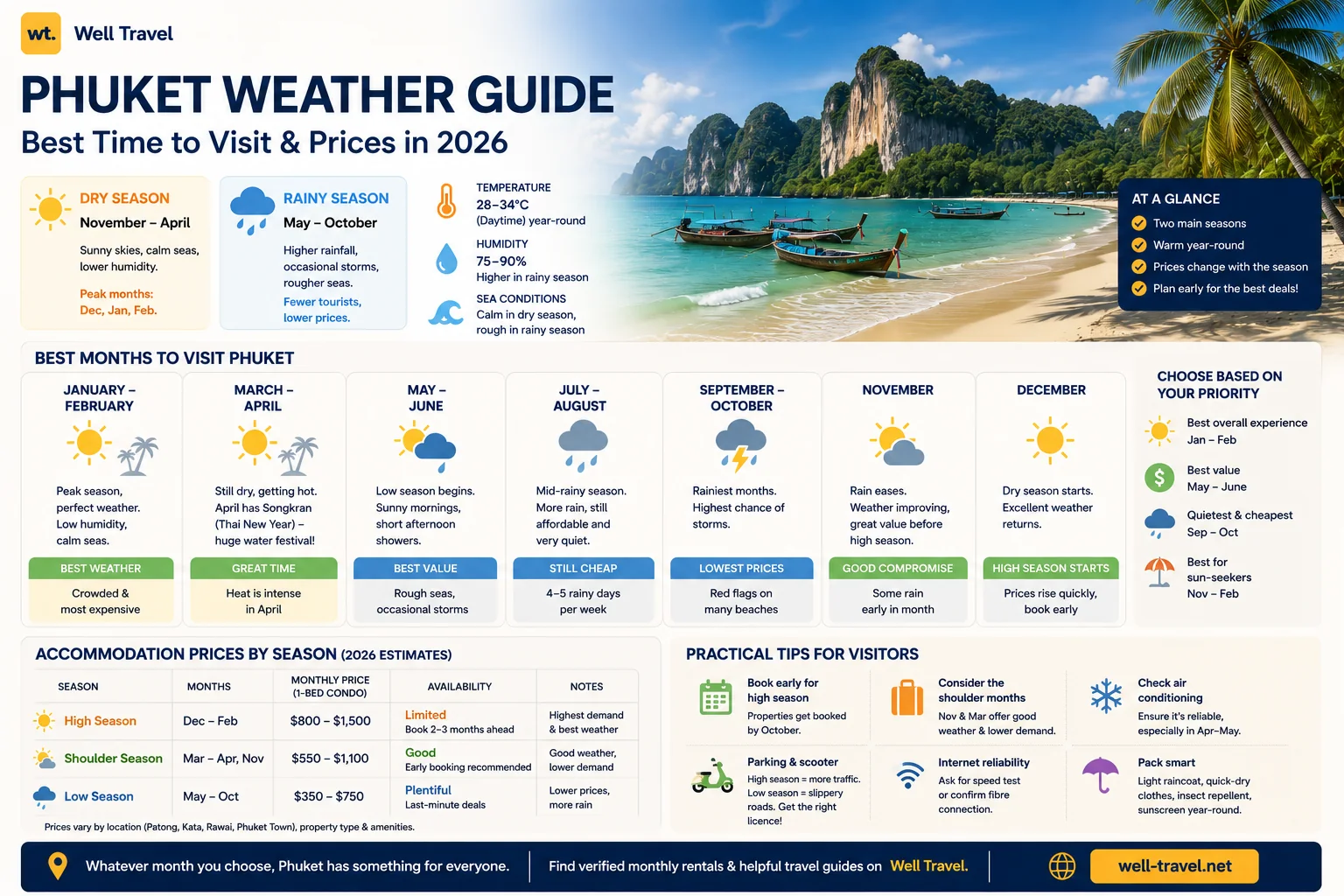
Temperatures remain fairly stable year-round (28–34°C daytime), but the “feel” changes a lot because of humidity and rain frequency.
Best Months to Visit Phuket
The “best” month depends on your priorities. Here’s how the seasons break down for different types of trips.
January – February: Peak Season, Perfect Weather
These are the most comfortable months in terms of weather: low humidity, almost no rain, excellent beach conditions. However, they are also the most crowded and most expensive for accommodation. If you book early (at least 2–3 months ahead) you can still find good deals, but expect higher prices than the rest of the year. Travelers who enjoy a lively social scene and don’t mind paying a premium will enjoy this period.
March – April: Heat Builds, Still Dry, Songkran
March is still mostly dry, but temperatures start climbing. April is the hottest month, and it also brings Songkran (Thai New Year, mid-April) – a massive water festival that makes Phuket incredibly lively. Visitors in April benefit from slightly lower accommodation prices compared to January, though prices remain moderate. The heat can be intense, so check that your hotel or rental has reliable air conditioning.
May – June: Low Season Begins, Best Value
May marks the start of the rainy season, but it’s not constant downpours. Many days have morning sun and short afternoon storms. This is the best time to find affordable accommodation as many hotels and rentals offer discounts. If you’re on a budget, arriving in May or June can save you 30–50% compared to January. The main trade-off: rougher seas (not ideal for swimming or snorkelling) and occasional 1–2 day storms.
July – August: Mid-Rainy Season, Still Cheap
Similar to June but with more consistent rain. Accommodation remains affordable. Some weeks may have 4–5 rainy days, but the island empties out. Great for travelers who don’t mind wet weather and prefer quiet beaches. Also a good time to find last-minute bookings.
September – October: Rainiest Months, Lowest Prices
These are the wettest months, with the highest chance of tropical storms. Many beaches have red flags. However, if you don’t plan on spending much time at the beach, you can find extremely cheap accommodation. Some hotels drop prices by 50% or more compared to high season. Note: flooding is possible in low-lying areas, so choose a property with good drainage. The cost savings can outweigh the weather downsides for indoor-oriented travelers.
November – December: Transition to High Season
November sees the end of the rainy season, but still some rain. By December the weather becomes excellent again. Prices rise quickly from December onward, and good accommodation gets booked fast. If you want to travel in December, start looking in October.
Accommodation Prices by Season (2026 Estimates)
| Season | Monthly Price (1‑bed condo) | Availability |
|---|---|---|
| High Season (Dec–Feb) | $800–$1,500 | Limited, book 2–3 months ahead |
| Shoulder (Mar–Apr, Nov) | $550–$1,100 | Good, early booking recommended |
| Low Season (May–Oct) | $350–$750 | Plentiful, last-minute deals |
Prices are estimates based on common listings on platforms like Well Travel for 2026. Actual rates depend on location (Patong vs. Kata vs. Rawai), property type, and amenities. Shorter hotel stays follow similar seasonal trends.
Practical Tips for Visiting Phuket
- Book early for high season: December–February properties get snapped up by October. Use Well Travel to filter by monthly stays or contact hotels directly.
- Consider the shoulder months: November and March offer good weather with lower demand. Great compromise.
- Check air conditioning: Many budget accommodations in low season skimp on AC. Confirm it’s in good working order, especially if visiting in April or May.
- Parking and scooter: If you plan to rent a scooter, high season means more traffic; low season is quieter but roads can be slippery. Read our guide on scooter licences in Thailand.
- Internet reliability: Phuket has good fibre broadband in tourist areas, but some hotels or condos have shared connections. If you need reliable WiFi, request a speed test before booking.
Conclusion: Which Month Should You Choose?
- Best overall experience: January or February (if budget allows).
- Best value: May or June (great weather-to-price ratio).
- Quietest and cheapest: September or October (accept rain).
- Best for sun-seekers: November–February.
Whatever month you choose, the Well Travel marketplace offers verified monthly rentals and helpful travel guides. Browse our Phuket weather guide by month for detailed climate data, and start planning your trip today.