Da Nang Weather by Month
Looking for a place in Da Nang, Vietnam? Tell us what you need and we’ll look for matching options.
Request a home search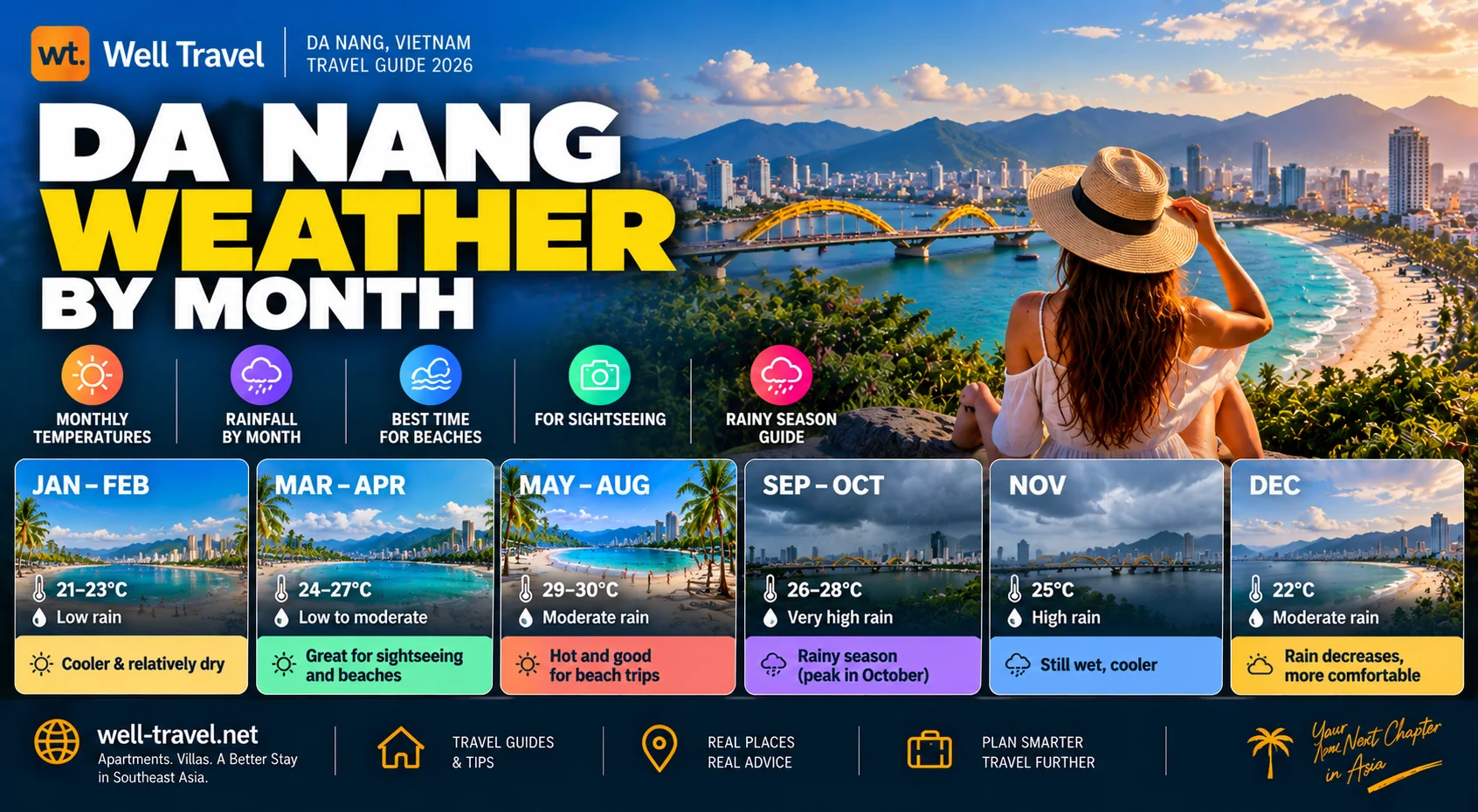
Da Nang Weather by Month
Da Nang’s weather shifts from cooler conditions early in the year to summer heat, followed by heavy autumn rain. February to April is a useful starting point for travelers seeking relatively dry weather before the hottest months. September to December is the main rainy period, with October recording the highest average rainfall. These planning conclusions follow the monthly climate figures below; they do not predict the weather on individual travel dates.
This guide describes historical climate patterns, not a forecast for 2026 or any specific year.
Monthly temperature and rainfall in Da Nang
The table uses the Japan Meteorological Agency’s Da Nang station normals. Temperatures are monthly means across day and night, not afternoon highs. Rainfall is the average total for the entire month.
| Month | Mean temperature | Rainfall |
|---|---|---|
| January | 21.7°C | 99.8 mm |
| February | 22.6°C | 16.5 mm |
| March | 24.4°C | 34.4 mm |
| April | 26.6°C | 55.0 mm |
| May | 28.8°C | 53.3 mm |
| June | 30.0°C | 55.2 mm |
| July | 29.4°C | 99.8 mm |
| August | 29.3°C | 143.1 mm |
| September | 27.9°C | 410.4 mm |
| October | 26.3°C | 692.5 mm |
| November | 24.9°C | 471.2 mm |
| December | 22.4°C | 210.2 mm |
JMA defines its current normals using the 1991–2020 reference period. A 30-year baseline helps compare seasons, but an individual month can be considerably wetter, drier, hotter or cooler. Different websites may use different stations and periods, so their figures should not be mixed into a single table. See JMA’s explanation of climatological normals,
What each month means for your plans
The notes below translate the seasonal pattern into practical planning suggestions. They are recommendations, not guarantees of sunshine, swimming conditions or uninterrupted sightseeing.
January
January suits travelers who prefer cooler conditions to summer heat. Pack a light layer and rain protection, and build your itinerary around exploring the city with optional beach time. Avoid making daily swimming the only measure of a successful trip.
February
February offers a useful combination of mild temperatures and relatively low rainfall. Consider it for walking and outdoor sightseeing if you dislike intense heat. A dry monthly average still leaves room for showers, so keep a compact rain jacket in your day bag.
March
March brings more warmth while remaining relatively dry. It is a practical month to combine city walks with time on the coast. Leave some flexibility between activities so you can use favorable weather for whichever outdoor plans matter most.
April
April is warmer again. For a mixed sightseeing and beach itinerary, plan longer walks earlier in the day and leave room for a shaded lunch break. If you are sensitive to heat, compare April with February or March before choosing your dates.
May
May moves into the hotter part of the year. Pack light clothing, sun protection and a reusable water bottle. Keep demanding outdoor activities separate from long exposed walks, rather than trying to fit every stop into one continuous outing.
June
June is a month to plan around heat. Give yourself an indoor break in the middle of the day and avoid an itinerary that depends on hours of walking without shade. A warm evening may feel more inviting for an unhurried stroll.
July
July remains hot. For a beach-focused trip, allow several possible beach sessions instead of committing all your hopes to one afternoon. Carry rain protection as well as sun protection, and check conditions before heading out.
August
August retains summer warmth as rainfall increases. Keep outdoor excursions movable and check forecasts before confirming weather-dependent activities. It is sensible to leave a spare slot in your itinerary rather than booking every day tightly.
September
September marks a substantial shift toward wetter weather. Choose plans you would still enjoy if some outdoor time were lost. Keep an indoor alternative for each major excursion and reassess your schedule as your travel dates approach.
October
October deserves the most flexibility because it is the rainfall peak in the table. If reliable beach time is your main reason for traveling, consider another month. If your dates are fixed, prioritize adaptable plans and follow local weather instructions.
November
November becomes cooler but remains very wet. Build a trip around a mix of indoor and outdoor time, taking walks when conditions allow. Do not assume that the end of October means the rainy season has finished.
December
December’s rainfall eases compared with the autumn peak, but it is still a relatively wet month. Bring a light layer and footwear that can cope with showers. Keep beach visits optional rather than treating December as a guaranteed dry-season escape.
The broad temperature and rainfall progression is also visible in Time and Date’s Da Nang climate summary, which uses weather reports from 1992–2021. Its figures are a separate dataset and are not substituted into the table above.
Choosing a month for beaches or sightseeing
For sightseeing with less heat, start by comparing February and March. April offers a warmer compromise. This is a planning judgment based on the balance between rainfall and temperature, rather than a universal best month for every traveler.
For a summer beach trip, June to August is worth considering if you tolerate heat. Vietnam’s national tourism website describes this period as generally having clear, calm sea conditions. That seasonal description cannot establish whether swimming will be safe on a particular day: follow beach flags and lifeguard instructions.
Understanding the rainy season
Da Nang’s tourism authority describes the rainy season as September through December. Treat those boundaries as a broad seasonal guide; the weather does not change on a fixed date.
Rainfall totals do not tell you exactly how many hours it will rain during your visit. Nor is it sensible to assume every wet-season shower will pass quickly. Historical coastal-management research documents prolonged heavy rain and flooding in Da Nang, with tropical storms and depressions affecting the city particularly in September–November. These historical findings describe the type of disruption to plan for, not the probability of a storm during your trip.
Using this guide before departure
Use monthly averages to choose your travel window, then use a current local forecast to organize individual days. Check rainfall timing, wind and weather warnings rather than relying on a single rain icon. Reconfirm weather-dependent excursions with the operator, and follow local instructions if severe weather develops.
For packing, combine lightweight clothing with rain protection throughout the year. Add a light layer for the cooler months and prioritize sun protection during the hotter months. Let the forecast close to departure determine the final balance.