Bali Attractions Guide 2026: Best Temples, Beaches, Rice Terraces, and Day Trips
Looking for a place in Bali, Indonesia? Tell us what you need and we’ll look for matching options.
Request a home searchQuick answer: Bali's best attractions are spread across the island. Base in South Bali for beaches and sunset temples, Ubud for rice terraces and culture, East Bali for water palaces and Mount Agung views, North Bali for lakes and waterfalls, and Sanur for Nusa Penida day trips. In 2026, foreign tourists must pay the IDR 150,000 Bali tourist levy once per visit, and temple etiquette is enforced more strictly. Plan by region to avoid spending your trip in traffic.
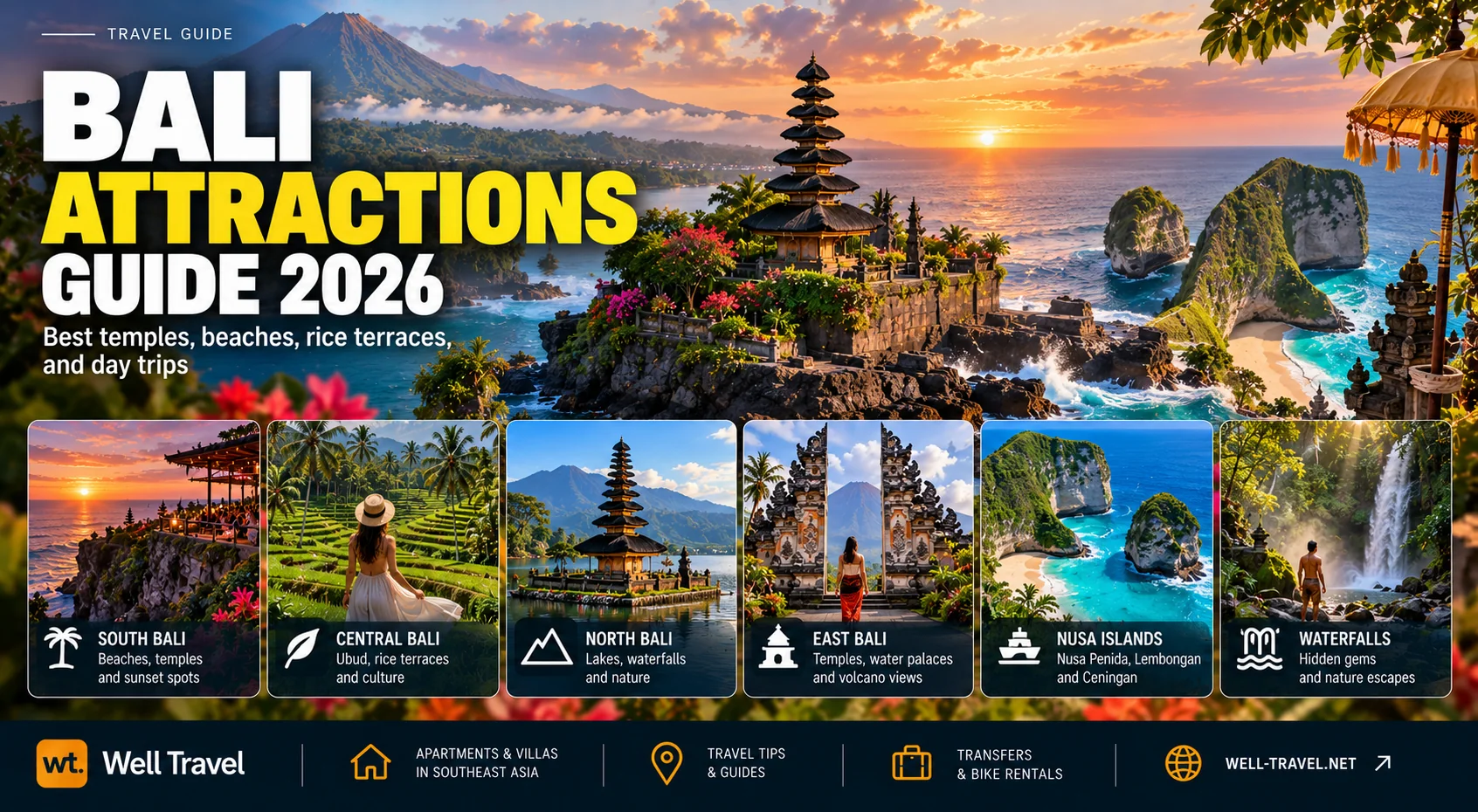
Bali at a glance: how to plan attractions by region
Bali isn't a single destination. The island is about 153 km wide, but traffic can turn a 30 km drive into two hours. The best way to plan is by region: South Bali (Kuta, Seminyak, Canggu, Uluwatu, Jimbaran, Nusa Dua, Sanur), Central Bali (Ubud, Tegalalang, Tampaksiring), East Bali (Karangasem, Besakih, Amed, Sidemen), North Bali (Bedugul, Munduk, Lovina), West Bali (Menjangan, Taman Nasional Bali Barat), and the Nusa islands (Penida, Lembongan, Ceningan). Pick two bases for a one-week trip and three for a two-week trip.
South Bali: beaches, temples, and sunset spots
Uluwatu Temple and the Bukit Peninsula
Uluwatu Temple sits on a cliff about 70 meters above the Indian Ocean. It's one of Bali's best sunset attractions. The Kecak fire dance at the temple amphitheater runs daily around sunset; tickets sell out, so arrive early or book through a reputable agent. The Bukit Peninsula also has surf beaches like Padang Padang, Bingin, Balangan, and Suluban. Many are beautiful but unsafe for casual swimming because of reefs and strong currents.
Tanah Lot Temple
Tanah Lot is a sea temple on a rock formation in Tabanan, about 45–60 minutes from Canggu or Seminyak. It's popular at sunset. The site includes other temples, a market, and cafes. Check tide times if you want to walk near the base; access can close during high tide or ceremonies.
Kuta, Legian, Seminyak, and Canggu
Kuta is the classic beach and surf area, with Waterbom Bali nearby for families. Legian and Seminyak are more polished, with beach clubs and restaurants. Canggu is the cafe-and-surf hub, with Batu Bolong Beach, Echo Beach, and Berawa. These areas are convenient for dining and nightlife, but traffic is heavy in the late afternoon.
Sanur, Nusa Dua, and Jimbaran
Sanur has a calm beach promenade, sunrise views, and easy access to Sanur Harbour for Nusa Penida boats. Nusa Dua is a resort enclave with clean beaches and water sports. Jimbaran Bay is known for seafood dinners on the sand and for Garuda Wisnu Kencana Cultural Park, home to a massive Vishnu statue and cultural performances.
Central Bali: Ubud, rice terraces, and culture
Ubud Monkey Forest and Ubud Palace
Ubud is Bali's cultural and wellness base. The Sacred Monkey Forest Sanctuary is a temple complex and conservation area with hundreds of long-tailed macaques. Keep bags zipped, remove loose sunglasses and hats, and don't feed the monkeys. Ubud Palace hosts evening dance performances, including Legong and Barong. The Ubud Art Market is nearby for crafts and souvenirs.
Tegallalang and Jatiluwih Rice Terraces
Tegallalang is the postcard rice terrace near Ubud, with swings, cafes, and photo spots. It's busy by mid-morning. Jatiluwih, a UNESCO Cultural Landscape, is much larger, quieter, and better for walking. Entry fees are modest, and the rice fields are part of a traditional subak irrigation system.
Tirta Empul, Goa Gajah, and Tampaksiring
Tirta Empul is a holy spring temple where Balinese Hindus purify themselves. Tourists can enter the temple but should respect the bathing areas and dress code. Goa Gajah, the Elephant Cave, is an archaeological site with stone carvings and a bathing complex. Both are easy to combine with Ubud or Tegalalang.
North and East Bali: temples, volcanoes, and water palaces
Mount Batur and Kintamani
The Mount Batur sunrise trek starts before dawn from the Kintamani area. It's a moderate hike, but the trail can be crowded. Use a licensed guide, wear proper shoes, and bring a jacket because the summit is cool and windy. Volcanic activity can change access, so check local advisories before booking. Lake Batur and the Toya Devasya hot springs are nearby.
Besakih, Lempuyang, Tirta Gangga, and Taman Ujung
Besakih Temple, on the slopes of Mount Agung, is Bali's largest and holiest temple complex. Dress respectfully, follow the official route, and be wary of unofficial guides demanding high fees. Lempuyang Temple is famous for the Gates of Heaven photo, but queues can be two hours or more; arrive at opening. Tirta Gangga and Taman Ujung are former royal water palaces with pools, bridges, and gardens. They're less crowded than the South Bali temples and combine well with Amed or Sidemen.
Bedugul and Ulun Danu Beratan
Ulun Danu Beratan Temple sits on Lake Beratan in the cool Bedugul highlands. It's one of Bali's most photographed temples. Nearby are the Bali Botanic Garden, Bali Treetop Adventure Park, and strawberry farms. Morning is usually clearer before clouds build.
Waterfalls and nature escapes
Bali has many waterfalls, especially in the central and northern highlands. Popular choices include Tegenungan, Tibumana, Tukad Cepung, Leke Leke, Gitgit, Munduk, Aling-Aling, and Sekumpul. Some are easy walks; others require stairs, river crossings, or guides. In the rainy season, avoid swimming if the water is brown, rising, or moving fast. Never ignore warning signs.
Nusa Penida, Nusa Lembongan, and Nusa Ceningan
The Nusa islands are a top day-trip or overnight destination from Sanur. Nusa Penida has Kelingking Beach, Diamond Beach, Angel's Billabong, Broken Beach, and Crystal Bay. Roads are narrow and hilly; many visitors hire a driver or join a tour. Kelingking's viewpoint is easy, but the beach descent is steep and not for everyone. Nusa Lembongan and Nusa Ceningan are smaller and more relaxed, with Devil's Tears, Dream Beach, and the Yellow Bridge.
Amed, Tulamben, Sidemen, and Munduk
Amed and Tulamben are East Bali diving and snorkeling bases. Tulamben is known for the USAT Liberty shipwreck, while Amed has black-sand beaches, Jemeluk Bay, and views of Mount Agung. Sidemen is a quieter rice-terrace valley with trekking and coffee plantations. Munduk, in North Bali, offers waterfalls, twin lakes, and cool mountain air. These areas suit travelers who want to slow down and avoid the southern crowds.
Best time to visit Bali for sightseeing in 2026
The dry season, roughly May to September, is best for beaches, temples, and hiking. July and August are the busiest and most expensive months. May, June, and September offer a good balance of weather and crowds. The rainy season, November to March, brings humidity, short heavy showers, and greener landscapes. Nyepi, Bali's Day of Silence, falls on March 19 in 2026; the airport closes and all public activity stops for 24 hours. Plan around it if your trip overlaps.
Getting around Bali
Ride-hailing apps like Gojek and Grab work in many areas but are restricted in some traditional markets and resort zones. Private drivers are the easiest option for multi-stop sightseeing days; expect to negotiate or book through your hotel. Scooter rentals are common, but you need an international driving permit with a motorcycle endorsement, a helmet, and valid insurance. Police checks happen, and accidents are costly. If you're not an experienced rider, don't rent a scooter.
Fees, tourist levy, and etiquette
As of 2026, foreign tourists entering Bali must pay an IDR 150,000 tourist levy once per visit through the Love Bali system. Keep the QR confirmation. Visa on arrival for eligible nationalities costs IDR 500,000 and can be extended once for another 30 days. Temple entry fees vary, and many attractions charge extra for parking, sarongs, swings, or photo spots. Carry small cash notes. At temples, wear a sarong and sash, cover shoulders, and never climb on shrines. Women who are menstruating should not enter temple grounds. Don't step on offerings, point your feet at people, or interrupt ceremonies.
Suggested itineraries
For a 5-day trip: Day 1 South Bali beaches and Tanah Lot sunset. Day 2 Uluwatu Temple and Kecak dance. Day 3 Ubud, Monkey Forest, Tegalalang, and Tirta Empul. Day 4 Mount Batur sunrise or Nusa Penida day trip. Day 5 Sanur, Nusa Dua, or Jimbaran seafood. For 10 days, add East Bali (Besakih, Tirta Gangga, Amed) and North Bali (Bedugul, Munduk, Lovina).
Final tips for 2026
Book popular attractions and Kecak performances ahead in peak season. Start early to avoid heat, crowds, and traffic. Respect Bali's Hindu customs; they're not a backdrop but a living culture. Use reef-safe sunscreen where possible, refuse single-use plastic when you can, and hire local guides. Bali rewards travelers who slow down and explore by region rather than trying to see everything in one rushed loop.