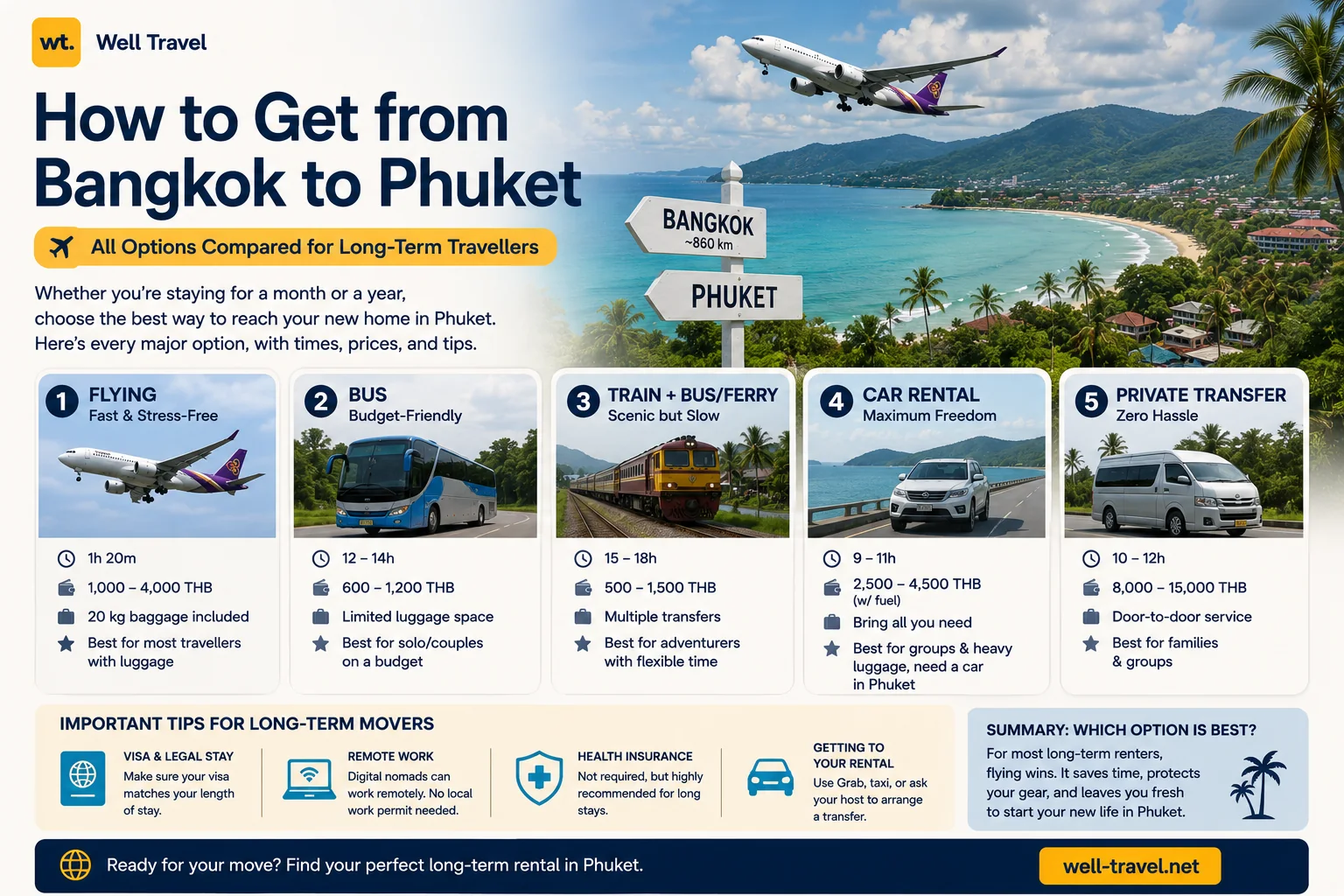
How to Get from Bangkok to Phuket: Best Travel Options
Looking for a place in Bangkok, Thailand? Tell us what you need and we’ll look for matching options.
Request a home searchWhether you're moving to Phuket for a month, three months, or a full year, getting there from Bangkok is your first real step. How you travel affects your budget, how much stuff you can bring, and how smoothly you'll settle into your rental. Here's the breakdown of every major option – pick what fits your long‑term move best.
1. Flying – Fast & Stress‑Free
Flying from Bangkok (BKK or DMK) to Phuket (HKT) only takes about 1 hour 20 minutes. For long‑term travellers with suitcases, electronics, and gear, it's the easiest way to avoid headaches.
- Airlines: Thai Airways, Bangkok Airways, AirAsia, Nok Air, and Thai Lion Air – multiple flights daily.
- Baggage: Low‑cost carriers usually include 20 kg checked baggage. Book extra in advance if you're hauling more.
- Cost: One‑way from 1,000 THB (budget, off‑peak) to 4,000 THB (full‑service, peak season).
- Getting to the airport: From central Bangkok, allow 30–60 min by taxi. Take the Airport Rail Link to BKK. For DMK, use a taxi or the free shuttle from Mo Chit BTS station.
Once you land in Phuket, grab a taxi, Grab, or pre‑booked transfer to your rental. Count on 30–45 min to most beach areas (Patong, Kata, Karon) and about 1 hour to the northern parts of the island.
2. Bus – Budget‑Friendly & Surprisingly Comfortable
If you're watching your baht or prefer land travel, buses run regularly between Bangkok and Phuket. The journey takes 12–14 hours.
- Bus terminals: Departures from Bangkok's Southern Bus Terminal (Sai Tai Mai) or Mo Chit 2 for some routes.
- Operators: Phuket Bus Terminal, Transport Co., and private companies like Lignite and Sombat Tour offer VIP coaches with reclining seats, air‑con, and sometimes snacks.
- Cost: 600–1,200 THB per person. Overnight buses also save you a night's accommodation.
- Luggage: Limited compartment space. Large suitcases might cost extra or need advance notice.
Buses arrive at Phuket Bus Terminal 2 or Terminal 1. From there, take a local taxi or songthaew to your rental. Best for solo travellers or couples with moderate luggage.
3. Train + Bus/Ferry – Scenic but Slow
No direct train from Bangkok to Phuket exists. The common combined route:
- Overnight train from Bangkok (Hua Lamphong) to Surat Thani (about 12 hours).
- From Surat Thani, hop a bus or minivan to Phuket (3–4 hours), or take a bus to the ferry pier then a ferry to Phuket (ferry + bus about 5–6 hours).
Pros: See the countryside, lower cost (train 300–800 THB), sleeper berths available.
Cons: Total time 15–18 hours, multiple transfers, not great with heavy luggage. For adventurous travellers with flexible schedules.
4. Car Rental – Maximum Freedom for Heavy Loads
Driving from Bangkok to Phuket takes about 9–11 hours (860 km) on Highway 4 and Highway 41. The roads are well‑paved and signposted, but traffic and unfamiliar roads can be tiring.
- Rental companies: Budget, Hertz, Avis, and local agencies at Bangkok airports or downtown.
- Cost: Rental 800–1,500 THB/day, plus fuel (~1,500 THB one‑way).
- One‑way drop‑off: Most companies allow you to drop the car in Phuket for an extra fee.
- Need: A valid international driving permit. Bring your own GPS or use a mobile map. Plan rest stops.
This option gives you full control over timing and luggage. Once in Phuket, you'll have wheels to explore the island and hit supermarkets before settling into your long‑term rental.
5. Private Transfer – Zero Hassle for Families & Groups
Several companies offer door‑to‑door private minivan or car transfers from Bangkok to Phuket. Travel time around 10–12 hours, cost 8,000–15,000 THB depending on vehicle size.
- Best for: Families with kids, groups of 4+, or anyone with tons of luggage who wants zero stress.
- Booking: Arrange through travel agents, hotel concierge, or online platforms. Confirm the driver's details in advance.
Important Tips for Long‑Term Movers
Visa & Legal Stay
Before you travel, make sure you have the right visa for your length of stay. Thailand offers tourist visas (30–60 days, extendable), visa‑exempt entries (30 days for many nationalities), and longer‑stay options like the Thailand Elite visa or a work permit. For stays of 1–12 months, a tourist visa with an extension or a multiple‑entry tourist visa is common. When you check into your rental, the host will ask to see your passport and visa stamp to confirm you're legal. No other documents (sponsor letter, income proof, return ticket) are needed.
Digital Nomads & Remote Work
If you work remotely for an employer outside Thailand, you don't need a local work permit or pay taxes in Thailand – provided you don't stay long enough to become a tax resident (usually 180+ days in a calendar year). Many digital nomads work under a tourist visa. It's a common practice, and hosts don't care about your employment as long as your visa is valid. Always check official Thai immigration sources for the latest rules.
Health Insurance
Thailand doesn't require travel or health insurance for tourist visa holders upon entry. But for a long‑term stay, it's strongly recommended. Medical costs for accidents or illness can be steep, and many hospitals ask for a deposit first. A simple international health insurance policy with outpatient and inpatient cover costs around 5,000–15,000 THB per year. Not mandatory, but peace of mind.
Getting to Your Rental After Arrival
Once you're in Phuket, you need to get to your apartment or house. Most long‑term rentals are in beach towns (Patong, Kata, Karon, Rawai, Bang Tao) or Phuket Town.
- Taxis & Grab: Available at the airport and bus terminals. Download Grab for transparent pricing. Expect 600–1,000 THB from the airport to popular beaches.
- Pre‑arranged transfer: Many hosts can arrange a driver for you – just ask in advance.
- Ride‑hailing alternatives: InDriver and local taxi cooperatives work too, but negotiate the fare upfront.
Arriving during daylight makes check‑in and orientation much easier.
Summary: Which Option Should You Choose?
| Option | Time | Cost (THB) | Best for |
|---|---|---|---|
| Flight | 1.5 h + airport time | 1,000–4,000 | Most travellers, especially with luggage |
| Bus | 12–14 h | 600–1,200 | Budget solo/couple, light luggage |
| Train + bus/ferry | 15–18 h | 500–1,500 | Scenic lovers, flexible schedule |
| Car rental | 9–11 h | 2,500–4,500 (w/ fuel) | Groups, heavy gear, need a car in Phuket |
| Private transfer | 10–12 h | 8,000–15,000 | Families, maximum convenience |
For most long‑term renters, flying wins. It saves time, protects your gear, and leaves you fresh to explore your new neighbourhood. Once you're settled, check out our guides on best places to live in Thailand and apartments vs hotels for month‑long stays to make your stay even smoother.